Since 1993, Sierra Nevada Alliance has been an authority in the region on land, water and wildlife issues. We publish internal documents and share external resources including directories, topical research reports, case studies for model community efforts, and toolkits to help local leaders.
Sign Up for the Sierra Resource Newsletter
Sierra Nevada Alliance Electronic Newsletter
The Sierra Resource is the Alliance’s monthly electronic newsletter. The Sierra Resource is the source for environmental news, science, advocacy, funding opportunities, and job announcements in the Sierra Nevada region.
You may also choose to have weekly action alerts, job announcements, and Sierra Nevada events delivered directly to your inbox.
If you have content for the Sierra Resource, please get in touch with info@sierranevadaalliance.org.
Resource Reports, Toolkits and Guides
Winter Wildlands Alliance’s Environmental Impacts of Winter Recreation Report
Studies show that winter recreation of all kinds can impact wildlife, which are particularly vulnerable to disturbance from unpredictable human activities such as off-trail snowmobiling or backcountry skiing. This report discusses some of those impacts in detail.
E.D. Jenny Hatch’s Watershed Survey Presentation: Fall Membership Meeting 2023
In 2023 Sierra Nevada Alliance asked members to contribute to a survey on the needs for coordination around addressing watershed health. Jenny Hatch presented the findings at the fall membership meeting. These slides share charts of the data collected by the survey.
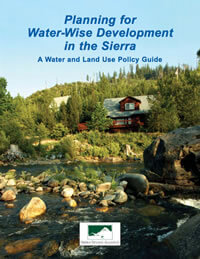
Planning for Water-Wise Development in the Sierra: A Water and Land Use Policy Guide
Poorly planned development has become a chief threat to the region’s waters. But what is good growth, from a watershed perspective? This guide provides local conservation groups, local government and the public useful information about the connection between development and water – water quality, water supplies and the health of the Sierra’s watersheds.
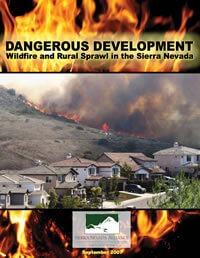
Dangerous Development: Wildfire and Rural Sprawl in the Sierra Nevada
This report chronicles that California now has 5.1 million homes in wildfire-hazard areas, more than any other state.
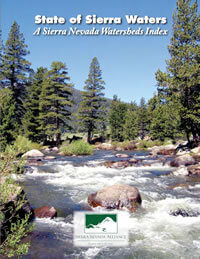
State of Sierra Waters: A Sierra Nevada Watersheds Index
The Sierra Nevada’s water is critical to the health, welfare and, indeed, to the very spirit of California and Nevada. Over 60% of California’s and most of Northern Nevada’s water supply comes from the Sierra Nevada. The region’s rivers, lakes and streams supply consumers, businesses and agriculture. Sierra rivers, lakes and streams also supply prime recreation – whether fishing, swimming, boating or simply marveling in the myriad flows – for residents and visitors alike. And they provide important habitat for wildlife. While most people believe these majestic waters are pristine and pure, our previous report, Troubled Waters of the Sierra, shows that all but one of the Sierra’s 24 major watersheds are impaired. This report goes one step further and establishes indicators the Alliance and others can revisit to track improvements or degradation of this precious resource over the years.
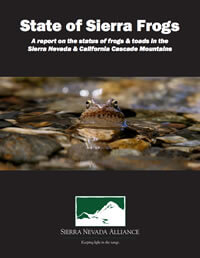
Six of the native frogs and toads of the Sierra Nevada and California Cascade ranges are experiencing dramatic declines in population. For example, the California red-legged frog, the largest native frog in the western United States, can no longer be found across 70 percent of its historic range in California and has almost completely disappeared from the Sierra foothills. These hard-hit critters are part of a larger Global Amphibian Crisis; 40% of the world’s 6000 labeled amphibian species have declined recently and nearly one third are facing extinction. This latest publication of the Alliance is meant to raise awareness of and public concern for the plight of Sierra frogs and toads.
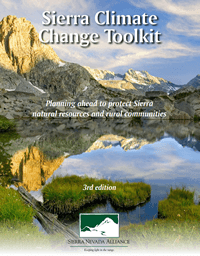
3rd Edition Sierra Climate Change Toolkit
The Sierra Climate Change Toolkit, 3rd Edition is the newest publication from the Sierra Nevada Alliance. This one-of-a-kind resource is designed specifically for Sierra resource managers, local governments, planners, non-profits, activists, and concerned citizens looking to reduce greenhouse gas emissions and adapt to climate change in order to save money, enhance local economies, and protect our unique rural communities. The Sierra Climate Change Toolkit, 3rd Edition is a starting point for those interested in addressing climate change in Sierra watersheds and communities. It is greatly expanded from previous editions, with more detail, new resources, and an expanded focus on both reducing greenhouse gas emissions and adapting to climate change within existing planning processes throughout the Sierra. The Toolkit covers a wide range of topics, including: the science of climate change and impacts at the global, national, state, and regional levels; the national, state, and regional context in which climate change emission reduction and adaptation efforts are occurring; frameworks, specific strategies, and case studies for reducing greenhouse gas emissions and adapting to climate change impacts through existing planning processes in the Sierra; tools to help communicate climate change and build support for local action; additional resources to help specific planning processes or projects address climate change.
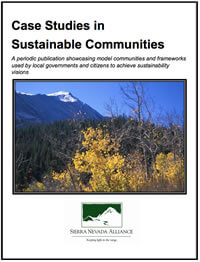
Case Studies in Sustainable Communities
In its first-ever case study publication, the Sierra Nevada Alliance highlights Nevada City, California and North Hampton, Massachusetts in their quests to create sustainable communities. Read on to learn about North Hampton’s development of a Sustainability Plan that ultimately led to increased pedestrian trails, green building codes, and enhanced community dialogue. The case study also highlights Nevada City’s community-wide effort to divest from fossil fuels. The case study features the city’s creation of a sustainability hub made successful through grassroots efforts and inspired volunteers.
Sierra Nevada Yard & Garden Guide
Sierra Nevada Yard & Garden is one stop shopping for creating a beautiful Sierra friendly yard and garden– defend your home from wildfire, protect water quality, create a low maintenance yard and more. The guide shows homeowners how to get beautiful gardens and yards that don’t require fuss for folks in the Sierra foothills, Eastern Sierra, and high country. The full color 157 page guide uses an innovative zone and island approach to fire safe designs and takes homeowners through a step-wise process: observe, design, select, and implement, making Sierra friendly yards simple and easy to create. The guide also includes chapters and appendices focused on plant selection, how-to, and yard and garden resources by sub-regions of the Sierra. The guide is filled with real-life features of Sierra homeowners gardening from 900 feet to 6,200 feet in elevation.
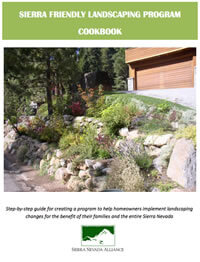
Sierra Friendly Landscaping Program Cookbook
This Sierra Friendly Landscaping Cookbook is a resource designed to help organizations, agencies or local governments start and coordinate Sierra Friendly Landscaping Programs. This “Cookbook” outlines steps and “ingredients” for designing a Sierra Friendly Landscaping outreach program. This reference includes the necessary resources to launch and implement a program, from tactics for inspiring homeowners to sign up and participate, to providing valuable resources to homeowners enabling them to implement Sierra Friendly Landscaping. Programs can offer free site evaluations, site plans, incentives and assistance in implementing landscapes that are Sierra Friendly.
Saving Sierra Places: An Activist’s Toolkit for Winning Land Use Campaigns
Want to know how CEQA works? Or how to get people to show up to an important hearing? Saving Sierra Places: An Activist’s Toolkit for Winning Land Use Campaigns is designed to assist community activists in developing effective campaigns to prevent sprawl and foster smart growth. Whether you are contemplating a new land use campaign or deep in a years-long battle, this toolkit is intended to help you organize the most effective campaign and develop new strategies for achieving your goal.
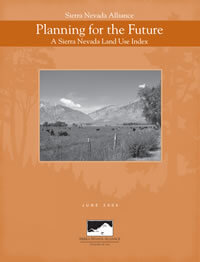
Planning for the Future – A Sierra Nevada Land Use Index
Often when people think of the Sierra Nevada, they envision millions of acres of untouched wilderness forming the backdrop for small historic communities – communities that symbolize the rural, small town culture that so many Americans idealize. However, the Sierra Nevada region has been challenged to maintain this mix of rural life and wilderness, and will continue to be challenged to preserve qualities that draw so many of us to live and visit in the Range of Light. It is an important time for communities in the Sierra. The planning decisions we make today will have a direct impact on what happens in the coming decades. It is not too late to choose the type of future we want.
Sierra waters are critical for the health and welfare of California and Northern Nevada. Almost all 24 major watersheds of the Sierra – those areas of land and water that capture precipitation and drain into a major river or lake – are polluted and impaired to some degree from 150 years of human activity. With future population growth sky rocketing and global warming raising temperatures in the Sierra and decreasing the amount of water stored in the snow pack, there is an urgent need for insightful planning for the future. The Sierra needs public participation in numerous resource management planning efforts and state and federal investment if we are to continue to provide ample clean water, diverse habitat, and prime recreation in the future. More importantly, the Sierra needs collaborative solutions and support, not more fighting.
Directories
Sierra Nevada Alliance Member Groups have been working together since 1993 to protect and restore the natural environment and communities in the Sierra Nevada. Our directory of Member Groups is an informational resource to connect organizations, agencies, the public, and media with conservation groups throughout the Sierra.